

DEW AND FROST ON MY LAWN
- Lawn Care
- 05/08/2026
Dew and frost are natural phenomena that occur in Canberra, Wagga Wagga and our surrounding areas. But as a lawn owner, you may wonder what the effects are for your lawn. Should you be concerned?
Dew and frost on a lawn will form like condensation on a cup when cold water is poured in. Dew and frost can form on lawns as the temperatures drop overnight and the temperature of the grass cools down. When the grass becomes cool enough, the once warm air that surrounds the grass can cool also. When this happens, the water vapour in the air around the grass can no longer hold as much water, causing tiny water droplets to form on the grass. This is known as dew.
If the temperatures are cool enough (below freezing, 0 degrees Celsius), the water may turn into a solid (ice) and cause frost on the lawn.
Dew won’t affect your lawn, and it will simply dry once the sun comes back up.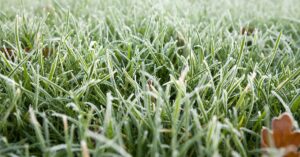 Mowing should be avoided until the leaf dries, but generally dew is of no detriment to your lawn.
Frost however is a different situation – on warm-season grasses like buffalo, couch, zoysia and kikuyu, in our Southern NSW and ACT areas frost can cause discolouration and damage to the leaf blade of the grass.
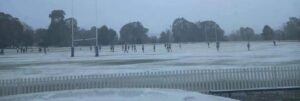
This is not to say that warm season varieties cannot be used in our regions – TifTuf has been successfully installed in a number of sporting venues in the Snowy Mountains and West Wyalong with great results even in snowy conditions.
Here are a few tips to help minimise the effect of frost on your lawn:
- Keep off the lawn whenever there is frost on it. This includes mowing. By walking across it, you are causing the blades to break and cause more damage.
- A light watering in the morning before the sun rises can help the frost on the lawn melt. By watering the lawn, the frost will melt quicker and more evenly. A very quick water of 30 seconds to a minute will do the job.